













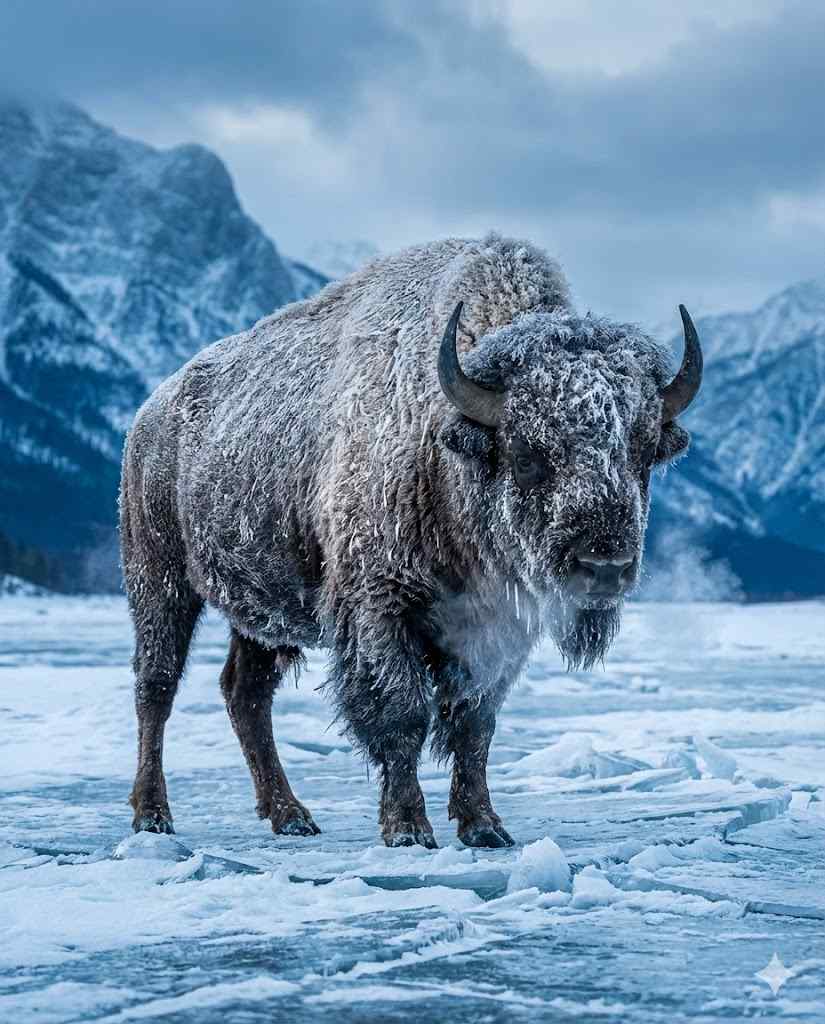
In the heart of winter, nature unveils some of its most breathtaking spectacles, where survival meets sheer beauty. The image before us—a majestic bison standing resolute on a frozen lake, its thick fur encrusted with frost, breath visible in the frigid air, and jagged mountain peaks looming in the misty background—encapsulates this perfectly. This isn’t just a photograph; it’s a window into the raw power and adaptability of one of North America’s most iconic animals. Taken in what appears to be the unforgiving landscapes of the Rocky Mountains, possibly in Yellowstone National Park or nearby Grand Teton, this scene reminds us of the delicate balance between wildlife and their harsh environments. As we delve into this blog post, we’ll explore the story behind such images, the biology of bison in winter, photography tips for capturing similar moments, and the ongoing conservation efforts to protect these magnificent creatures. Let’s journey into the frozen wilds.
Decoding the Scene: Where Winter Magic Meets Wildlife
At first glance, the bison in the photo commands attention with its imposing stance. Covered head to toe in a layer of hoar frost, it looks almost ethereal, like a creature from a fantasy tale. The frozen lake beneath its hooves, cracked and dusted with snow, suggests a location where temperatures plummet well below freezing—often to -30°F or lower. The breath steaming from its nostrils adds a dynamic element, hinting at the geothermal activity or simply the extreme cold that characterizes regions like Yellowstone National Park. Photographers frequently capture such moments here, where bison roam freely amid geysers, hot springs, and icy expanses.
The background, with its sharp, snow-capped peaks under a brooding sky, points to the Greater Yellowstone Ecosystem, encompassing Yellowstone and Grand Teton National Parks in Wyoming. These areas are renowned for their dramatic winter landscapes, where frozen rivers and lakes become highways for wildlife. Similar shots have been documented at places like Firehole Lake in Yellowstone, where steam from geothermal features creates a mystical fog that enhances the frost on animals. If you’ve ever visited, you know the silence is profound, broken only by the crunch of snow or the distant call of a raven. This particular image evokes the work of photographers like Tom Murphy or Drew Simms, who brave subzero conditions to immortalize these scenes.
To give you a sense of the environment, here’s a similar vista from the region, showcasing the stark beauty that draws adventurers and photographers alike.
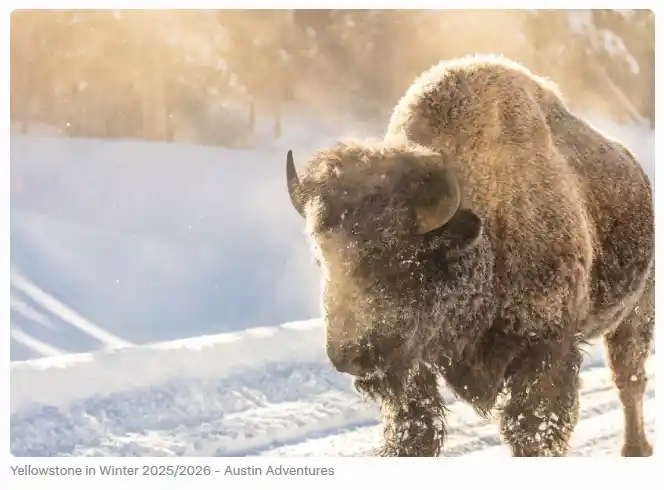
While the exact spot of this photo might remain a mystery without metadata, it’s emblematic of the Rocky Mountains’ winter allure. For those planning a trip, areas like Lamar Valley in Yellowstone offer prime viewing spots for bison in snow, though always remember to maintain a safe distance— these animals can charge if provoked.
Bison Biology: Masters of Winter Survival
While the exact spot of this photo might remain a mystery without metadata, it’s emblematic of the Rocky Mountains’ winter allure. For those planning a trip, areas like Lamar Valley in Yellowstone offer prime viewing spots for bison in snow, though always remember to maintain a safe distance— these animals can charge if provoked.
Bison Biology: Masters of Winter Survival
What makes this bison’s appearance so striking is not just the aesthetics but the underlying biology that allows it to thrive in such conditions. Bison, scientifically known as Bison bison, have evolved remarkable adaptations for winter survival. Their thick, woolly coats grow denser in the colder months, consisting of a soft underfur and coarse guard hairs that trap heat and repel moisture. This insulation is so effective that snow can accumulate on their backs without melting, as their body heat doesn’t escape. In the photo, the frost clinging to the bison’s fur and beard illustrates this perfectly—icicles form from condensed breath and humidity, turning the animal into a living ice sculpture.
Behaviorally, bison are built for the elements. They use their massive heads like snowplows to sweep away deep drifts and access buried grasses, a technique known as “cratering.” Their digestive systems are efficient at extracting nutrients from low-quality forage, allowing them to subsist on sparse winter vegetation. Physiologically, they conserve energy by reducing activity and huddling in herds for shared warmth. In extreme colds, like the -35°F mentioned in similar captures, bison can endure thanks to a low metabolic rate and fat reserves built up in summer.
For a closer look at how these adaptations play out in a group setting, consider this image of a bison herd navigating snowy mountain terrain, where their collective resilience shines through.
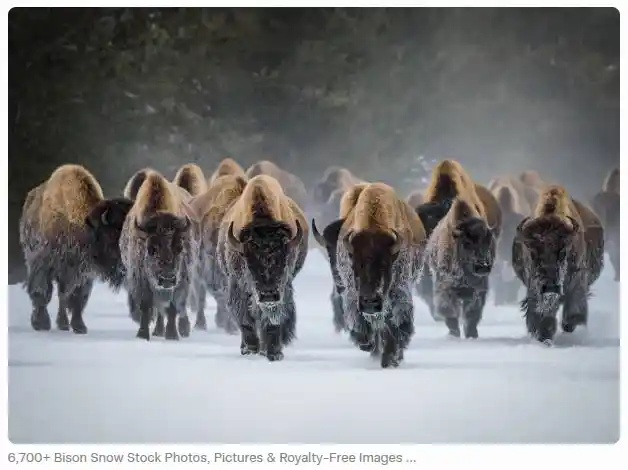
Interestingly, there are two subspecies: the plains bison (common in Yellowstone) and the wood bison (found further north in Canada). While the photo likely depicts a plains bison, wood bison share similar traits but are adapted to even harsher boreal forests. Both showcase nature’s ingenuity in the face of adversity.
The Art of Wildlife Photography: Tips from the Frozen Frontlines
Capturing an image like this requires more than luck—it’s a blend of preparation, patience, and respect for the wild. Wildlife photographers often endure hours in blinding blizzards to get that perfect shot. For instance, positioning yourself downwind to avoid detection, using long telephoto lenses (like a 400mm or greater) to maintain distance, and timing visits for dawn or dusk when light is soft and animals are active.
Key tips for aspiring photographers:
- Gear Essentials: Invest in weather-sealed cameras and lenses. Tripods help stabilize shots in low light, and hand warmers keep batteries from dying in the cold.
- Ethical Practices: Always prioritize animal welfare. In parks like Yellowstone, regulations mandate staying at least 25 yards away from bison to prevent stress or dangerous encounters.
- Composition Tricks: Use the rule of thirds to frame the subject against the vast landscape, as seen in this photo where the bison’s gaze draws the viewer in.
To illustrate the behind-the-scenes effort, here’s a depiction of a wildlife photographer in action, braving the elements to document bison in winter.
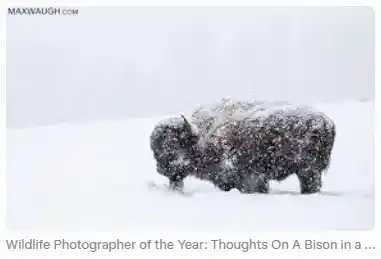
Post-processing can enhance the mood—boosting contrast to highlight the frost while preserving natural colors. If you’re inspired, start with guided tours in national parks, where experts share spots like those yielding this frosty masterpiece.
Conservation Challenges: Safeguarding the Bison’s Future
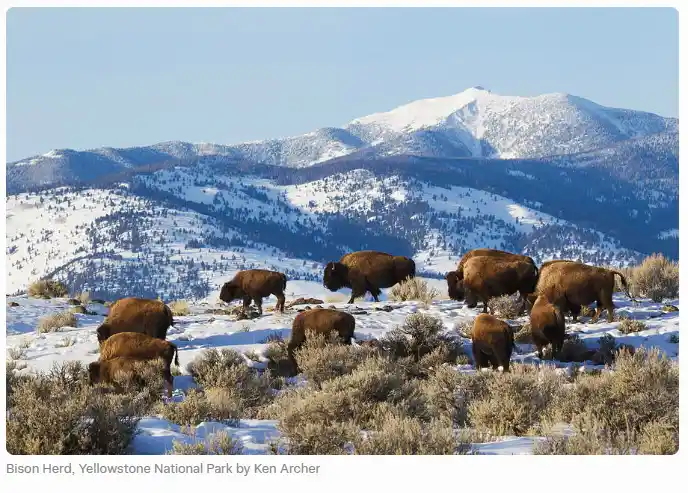
Beyond the beauty, this image underscores the importance of conservation. Bison once numbered in the tens of millions across North America but were nearly driven to extinction by overhunting in the 19th century. Today, the Yellowstone herd, about 5,000 strong, represents one of the last genetically pure populations of plains bison. However, they face threats like habitat loss, disease (such as brucellosis), and conflicts with ranchers when they wander outside park boundaries.
For wood bison in Canada, the situation is more precarious—they’re listed as threatened under the Species at Risk Act, with populations recovering through reintroduction programs in places like Wood Buffalo National Park. Efforts by organizations like the Wildlife Conservation Society and Parks Canada involve habitat restoration, disease management, and anti-poaching measures. Globally, the IUCN classifies American bison as near threatened, emphasizing the need for continued protection.
You can contribute by supporting national parks, advocating for wildlife corridors, or donating to groups like the World Wildlife Fund. Images like this one serve as powerful reminders—stirring public interest and funding for conservation.
Here’s another evocative scene of bison in their snowy domain, highlighting the herds we must protect for future generations.
Reflections: Why This Image Resonates in 2025
As we wrap up this exploration on December 27, 2025, amid a world grappling with climate change, this frosty bison stands as a symbol of endurance. Rising temperatures could alter these winter wonderlands, affecting migration patterns and food availability for bison. Yet, their story is one of comeback—from near extinction to thriving in protected areas.
Whether you’re a nature enthusiast, photographer, or simply someone who appreciates the wild, let this image inspire you to explore responsibly. Plan a winter trip to the Rockies, armed with knowledge and respect, and perhaps capture your own moment of magic. In the end, it’s these glimpses into the untamed that remind us of our place in the natural world—humble observers of its timeless drama.